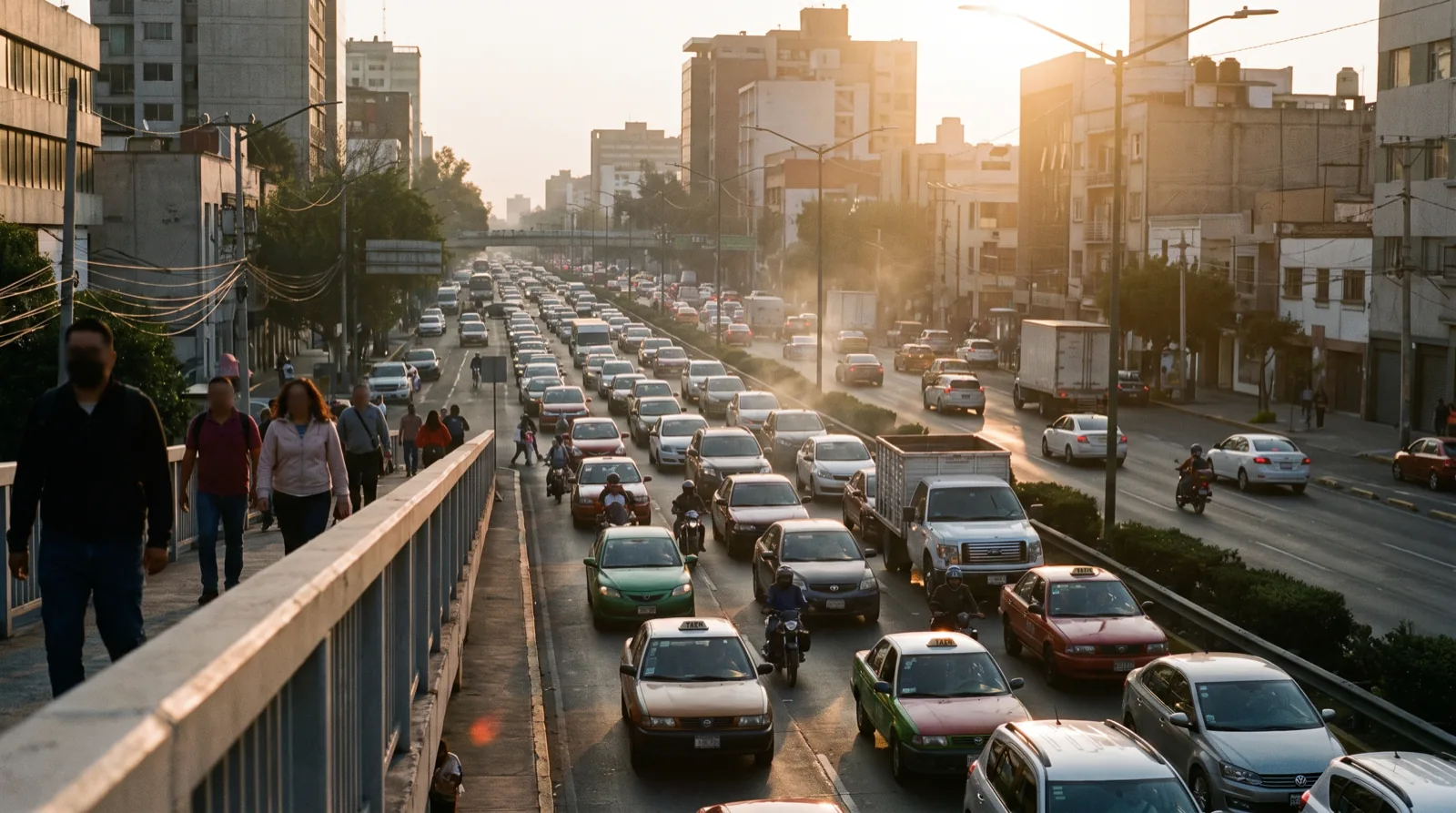
Driving yourself · Mexico City
Is It Safe to Drive in Mexico City? (2026)
It is not the crime that stops you. It is the paperwork.
Driving yourself in Mexico City is legal, and it is not the crime risk that stops most visitors. The U.S. State Department rates Mexico City at Level 2 — "exercise increased caution" — and says outright that "there are no specific restrictions on travel for U.S. government employees in Mexico City." What defeats visiting drivers is regulation: Hoy No Circula grounds a car for a full day based on its plate, a foreign plate loses every weekday from 5:00 to 11:00 a.m. on top of that, Mexican liability insurance is compulsory because U.S. and Canadian policies are not recognised, and toll booths are migrating to electronic-only payment during 2026. Read the four rules below before you decide, then compare the cost against a driver hired for the day at a flat per-vehicle rate.
- Advisory level
- Level 2 exercise increased caution
- Your car is grounded
- 1 day every week, by plate digit
- Foreign plate, extra ban
- 5–11 a.m. every weekday, plus all Saturdays
- Driver for the day
- $360 flat per vehicle, 8 h, SUV
Driving in Mexico City, at a glance
Is it safe?
Mexico City sits at Level 2, "exercise increased caution", with no travel restrictions on U.S. government employees inside the city. The advisory's one night-specific line asks for extra care after dark outside the main tourist areas.
Is it easy?
No. Limits are 50 km/h on primary roads and 80 km/h only on the central lanes of Periférico and Viaducto. Motorcycles filter between stopped lanes, and unmarked topes (speed bumps) arrive with no warning.
What will actually stop you?
Hoy No Circula. One weekday per week your plate is banned from 5:00 a.m. to 10 p.m. across 16 boroughs and 18 State of Mexico municipalities. A foreign plate loses 5:00–11:00 a.m. daily and all Saturdays as well.
What is the alternative?
A driver hired for the day at a flat $360 per vehicle for 8 hours in the SUV. The plates, the hologram, the insurance, the tolls and the parking stop being your problem.
Hoy No Circula: the rule that grounds your car one day a week
Hoy No Circula ("today it does not circulate") is a driving-restriction programme that bans a vehicle from the road on a fixed weekday from 5:00 a.m. to 10 p.m., decided by the last digit of its licence plate and its emissions hologram. It covers all 16 boroughs of Mexico City and 18 municipalities of the State of Mexico — the entire metropolitan area a visitor would drive through. It makes no distinction between residents and tourists. It reads your plate.
| Day | Sticker colour (engomado) | Plate ends in | Off the road |
|---|---|---|---|
| Monday | Yellow | 5, 6 | 5:00 a.m. – 10 p.m. |
| Tuesday | Pink | 7, 8 | 5:00 a.m. – 10 p.m. |
| Wednesday | Red | 3, 4 | 5:00 a.m. – 10 p.m. |
| Thursday | Green | 1, 2 | 5:00 a.m. – 10 p.m. |
| Friday | Blue | 9, 0 | 5:00 a.m. – 10 p.m. |
| Saturday | By hologram, not colour | Hologram 1: two Saturdays a month · Hologram 2: every Saturday | 5:00 a.m. – 10 p.m. |
| Sunday | — | Everyone | No restriction |
Vehicles carrying hologram 0 or 00 — new cars and low-emission cars, verified in Mexico City or the State of Mexico — are exempt from the weekday restriction. Electric vehicles carry a permanently exempt hologram. During an environmental contingency the authorities add restrictions on top of the normal calendar, and exemptions that normally work stop working.
Driving in Mexico City with US plates or out-of-state plates
A vehicle with foreign plates, or Mexican plates from a state other than Mexico City or the State of Mexico, and no metropolitan verification hologram, is treated as the most restricted category there is. Three bans stack on the same car.
| Your situation | What you may drive |
|---|---|
| Foreign or out-of-state plate, no metropolitan hologram | Banned every weekday 5:00–11:00 a.m., banned all day on the weekday matching your last plate digit, and banned every Saturday. Sundays are free. |
| Same car with a free Pase Turístico | Circulates without restriction for the days on the permit — the Mexico City government caps it at a limited allowance per semester. The pass is void on environmental-contingency days. |
| Same car after voluntary emissions verification (hologram 0 or 00) | Circulates like a locally registered car — the daily restriction disappears, and only the contingency rules remain. |
| A car you hired locally, on Mexico City plates | The plate-digit day still applies unless the car carries hologram 0 or 00. Ask the counter for the hologram and the last plate digit before you sign. |
The Pase Turístico is free and is requested online through the Mexico City government before you enter the metropolitan zone. It is granted to private, non-commercial vehicles within a published model-year range, and the allowance is counted per six-month period, split across passes of a few days each.
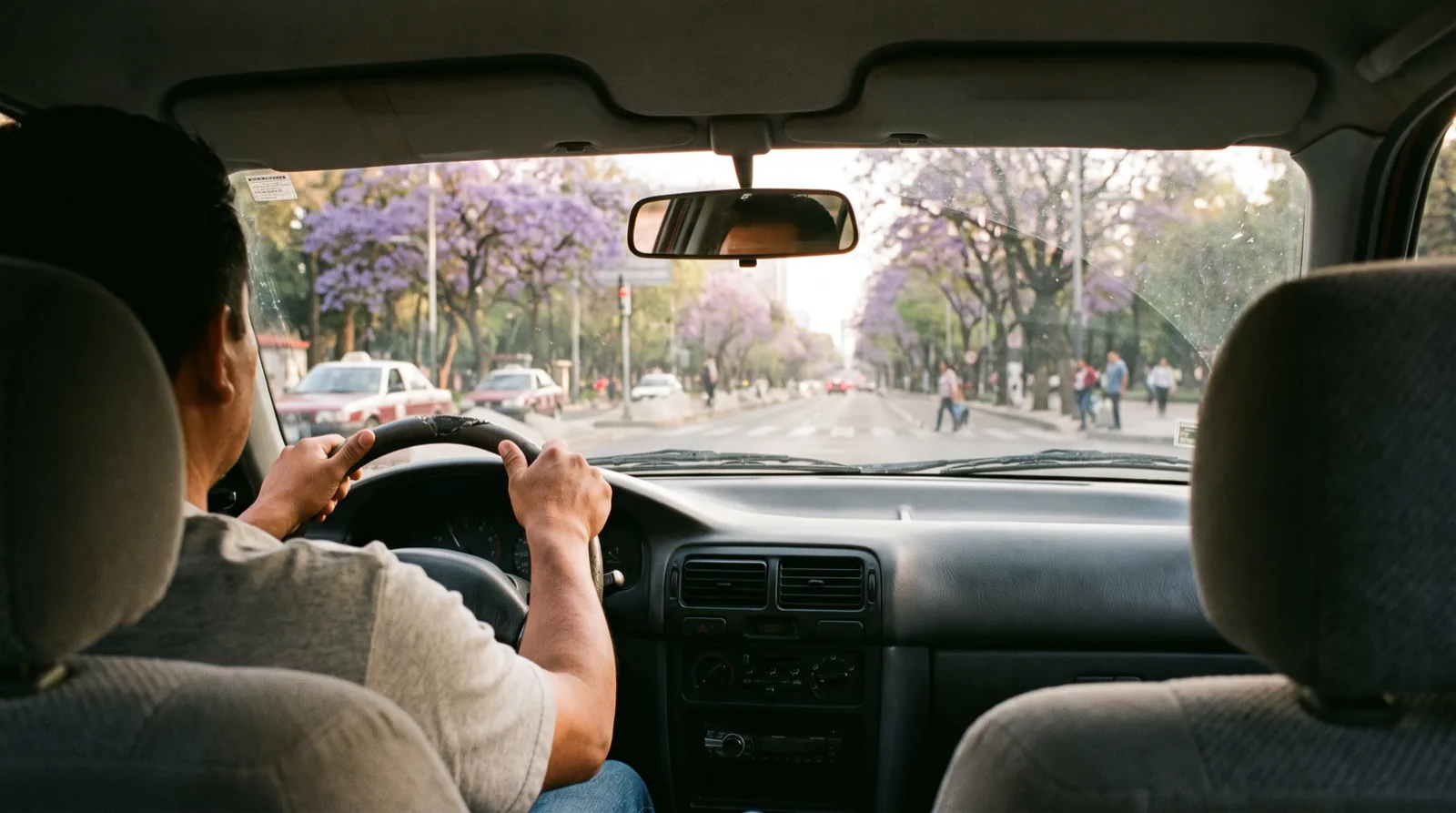
Is it easy to drive in Mexico City? Honestly, no
Safety and ease are different questions, and the second one is where visitors struggle. Mexico City is a valley metropolis of more than twenty million people at 2,240 metres of altitude, laid out as a ring of controlled-access roads feeding a grid of one-way ejes viales. Four things surprise almost every first-time driver here.
| Road type | Limit | Where you meet it |
|---|---|---|
| Controlled-access road, central lanes | 80 km/h | Periférico, Viaducto, Circuito Interior |
| Primary road | 50 km/h | Reforma, Insurgentes, the ejes viales |
| Secondary road | 40 km/h | Neighbourhood through-streets |
| Calm-traffic zone | 30 km/h | Roma, Condesa, Coyoacán side streets |
| School, hospital or care-home zone | 20 km/h | Signed on approach, cameras common |
| Car park or pedestrian area | 10 km/h | Underground garages, plazas |
1. The limits are lower than they look
Reforma is a boulevard that invites 70 km/h and is posted at 50. Cameras enforce it, and exceeding the limit by a wide margin is penalised far more harshly than a small overshoot.
2. Camera fines work differently depending on your plate
Mexico City runs fotocívicas, a points system: a car on Mexico City plates starts each semester with a balance of points, loses them for camera-detected infractions, and pays with civic courses instead of money. That system only covers Mexico City plates. A camera that catches a foreign or out-of-state plate produces an ordinary cash fine instead. The visitor gets the version with the bill attached.
Parking, meters and valet: the part nobody budgets for
Street parking in the neighbourhoods a visitor actually wants — Polanco, Roma-Condesa, Anzures, Lomas de Chapultepec and much of Benito Juárez — is metered by the city's parquímetros scheme. Meters run Monday to Friday, 8 a.m. to 8 p.m. in most zones, with evening hours extended to 1 a.m. in Polanco and in Roma–Hipódromo on the busiest nights of the week.
Meters take coins, a local prepaid card or a local parking app — not a foreign credit card tapped at the machine. Overstaying is fined in UMA units and a wheel clamp carries its own release fee, payable in person. Restaurants and hotels in these neighbourhoods solve the problem with valet, which is normal, staffed and generally reliable, and adds a per-visit cost plus a tip on top of a meal you had already priced.
Outside metered zones you will meet franeleros — informal attendants who claim a stretch of public kerb, wave you in with a rag and expect a tip when you leave. They are not officials and the space is not theirs, but the practical reading is simple: a few coins is the cost of a car nobody touches.
Is it safe to drive in Mexico at night?
Inside Mexico City, night driving is not restricted. The advisory for the city asks visitors to "exercise extra caution, especially at night, outside of popular tourist areas where police patrol more frequently" — a caution about where, not a ban on when. Roads are lit, traffic thins after 10 p.m., and the Hoy No Circula clock stops at 10 p.m. as well.
Which matters, because a great deal of what visitors come here to do happens after dark — the lucha libre, a late taco crawl, Roma and Condesa on a Friday. The obstacle on those evenings is not the driving itself. It is that the meters in Polanco and Roma–Hipódromo run to 1 a.m., that the guidance below asks for a dispatched vehicle rather than a taxi hailed in the street, and that whoever drives home is whoever did not drink. How an evening in the city is actually handled is further down this page.
Mexican insurance is mandatory, and your home policy is not it
The Mexican government does not recognise auto insurance issued in the United States or Canada as valid proof of liability coverage. Liability insurance is required to drive on federal roads and bridges, and you can be asked to show proof at a checkpoint, at a border crossing or at a traffic stop. A foreign policy — even one whose fine print mentions Mexico — does not satisfy that requirement on its own.
Tolls in 2026: the cash lane is disappearing
Every fast route out of Mexico City is a toll road — the autopistas to Teotihuacan, Puebla, Cuernavaca and Toluca all charge at casetas. Through 2026 Mexico's transport ministry is migrating those booths to electronic toll collection, with the stated goal of ending cash payment. As of July 2026 cash is still accepted at many plazas, but the number of cash lanes is falling and the queues in them are the long ones. The federal transport secretary described the move to zero cash as a matter of months, without publishing a date.
- Tags valid nationwide
- 3 IAVE · Televía · PASE
- Who may open one
- Residents a Mexican payment method, not a sticker sold at the booth
- Foreign card at the barrier
- Unconfirmed no clean solution at 90 km/h
Three electronic tags work nationwide — IAVE, Televía and PASE — and they are accounts opened by a resident with a Mexican payment method, not a sticker sold to a visitor at the booth. Whether ordinary debit and credit cards will be accepted directly at the barrier has not been confirmed. For a visitor driving themselves, that is a live and worsening problem: arriving at a plaza with only a foreign card and no tag is a situation with no clean solution at 90 km/h.
Driving yourself vs. hiring a driver: the honest comparison
Self-driving wins in exactly one scenario: a long, flexible trip well outside the metropolitan area, where you want the car parked at your accommodation for a week. For a city stay with day trips, the arithmetic goes the other way — and not mainly on price.
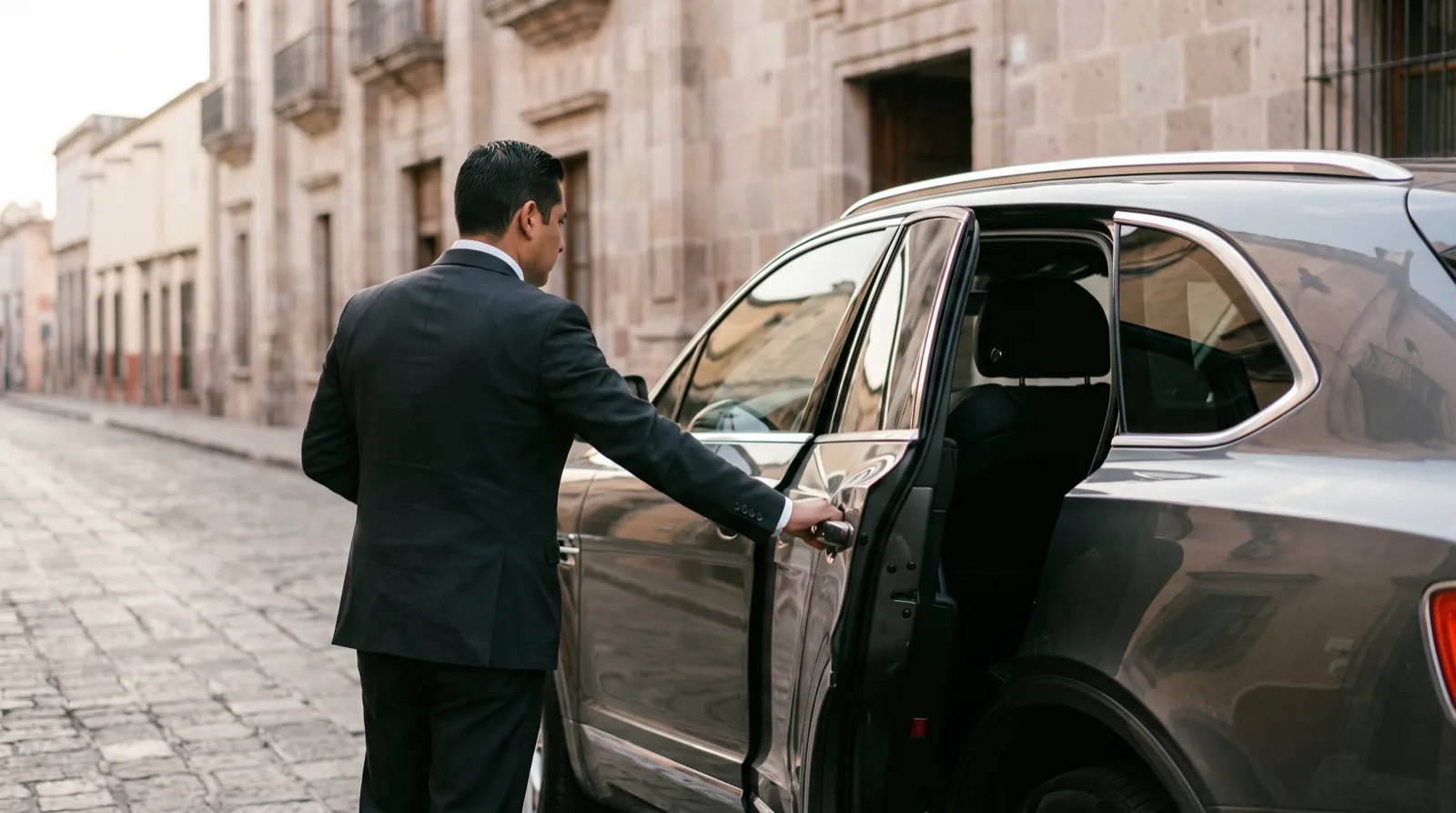
| What you deal with | Driving yourself | Private driver |
|---|---|---|
| Hoy No Circula | Your problem. One weekday lost, more if the plate is foreign. | Handled — the operator assigns a vehicle that may circulate that day. |
| Insurance | A Mexican liability policy must be bought and carried. | The operator's, already in force. |
| Tolls | Cash lanes shrinking through 2026; tags are resident accounts. | Included in the flat fare; the vehicle carries a tag. |
| Parking | Coin meters, local apps, valet fees, franeleros. | Included — the driver waits with the vehicle while you visit. |
| Night return from a day trip | You drive it, against the advice on inter-city travel after dark. | Planned for daylight, driven by someone who knows the road. |
| Price shape | Daily rate, plus fuel, plus tolls, plus parking, plus insurance. | Flat $360 for 8 hours in the SUV, $420 in the van — everything inside. |
The places visitors actually ask about — and what driving yourself to them costs
Read those four rules again with a real itinerary in your hand, because that is where they land. The most-searched things to do here are not out on the autopista — they sit inside the metropolitan zone, which is exactly the area Hoy No Circula covers, and they cluster in exactly the neighbourhoods where the kerb is metered.
| Where you are going | What driving yourself adds to it |
|---|---|
| Xochimilco, for the trajineras | It is a borough at the southern end of the city, well inside the Hoy No Circula boundary, and it is a there-and-back run with a long wait in the middle. Every hour the car sits by the water is an hour you have already paid for. |
| Lucha libre | An evening event finishes when it finishes, and a crowd comes out with you. The walk back to wherever you left the car is the part of the night nobody plans. We do not publish the arena's schedule or ticket prices — buy those yourself; what we handle is the leaving. |
| A taco tour | The one itinerary where self-driving is not merely inconvenient. If the crawl involves drinking, somebody in the car is not drinking — and if nobody wants that job, it was never a driving night. |
| Coyoacán and its market | The centre is a calm-traffic zone: 30 km/h side streets, per the table above, with metered kerb around it that wants coins or a local app rather than your card. |
| The city after dark | Driving at night inside the city is not restricted, and the Hoy No Circula clock stops at 10 p.m. The friction is what happens at the door: meters in Polanco and Roma–Hipódromo run to 1 a.m., and the advisory's own employee rules ask for a dispatched vehicle rather than a taxi hailed in the street. A driver booked that morning is the dispatched vehicle. |
None of those is a day trip, so none of them has a fare of its own. One product covers all five: you hire a driver for the day — eight hours, your itinerary, the same vehicle and the same English-speaking driver from the first stop to the last. A single day holds the lot: the trajineras at Xochimilco in the morning, Coyoacán and its market after lunch, the lucha libre in the evening. What you are really buying is the joins between them.
Skip all four obstacles
Let someone whose plates, hologram, insurance and toll tag are already in order do the driving. Flat price per vehicle, hotel pickup, English-speaking driver, card or PayPal, free cancellation up to 24 hours before.
Xochimilco in the morning, Coyoacán after lunch, the lucha libre in the evening — one driver for the whole day, one flat fare, and a car already waiting outside when you walk out.
Driving in Mexico City — the questions visitors actually ask
Is it safe to drive in Mexico City as a tourist?
Yes, with normal urban caution. Mexico City is rated Level 2, "exercise increased caution", and the advisory states that there are no specific restrictions on travel for U.S. government employees in Mexico City — the strongest signal available that the city itself is not the obstacle. The obstacles are the four regulatory ones on this page.
Is it easy to drive in Mexico City?
No. Limits are 50 km/h on primary roads and 80 km/h on the central lanes of controlled-access roads, motorcycles filter between stopped lanes, topes arrive unsigned, left turns are made from lateral roads via a retorno, and metered parking wants coins or a local app rather than a foreign card.
Is it safe to drive in Mexico at night?
Inside the city, yes, with extra caution outside the main tourist areas. Between cities, no: U.S. government employees may not travel between cities after dark anywhere in Mexico, and U.S. citizens are advised to follow the same restriction. Plan day trips to be back before nightfall.
Can I drive in Mexico City with US plates?
Yes, but a foreign-plated car with no metropolitan hologram is banned every weekday from 5:00 to 11:00 a.m., banned all day on its plate-digit weekday, and banned every Saturday. The free Pase Turístico lifts that for a limited allowance of days per semester; a voluntary verification earning hologram 0 or 00 lifts it for good.
What is Hoy No Circula and does it apply to tourists?
It is a driving restriction by plate digit and hologram, in force 5:00 a.m. to 10 p.m. across 16 Mexico City boroughs and 18 State of Mexico municipalities. It applies to every vehicle in the zone, including a visitor's own car and a car hired locally. It reads your plate, not your passport.
Do I need Mexican car insurance to drive in Mexico City?
Yes. U.S. and Canadian policies are not recognised as valid proof of liability coverage in Mexico, and liability cover is required on federal roads and bridges. Buy a Mexican policy before you drive and carry printed proof.
Is it better to hire a driver than to drive yourself?
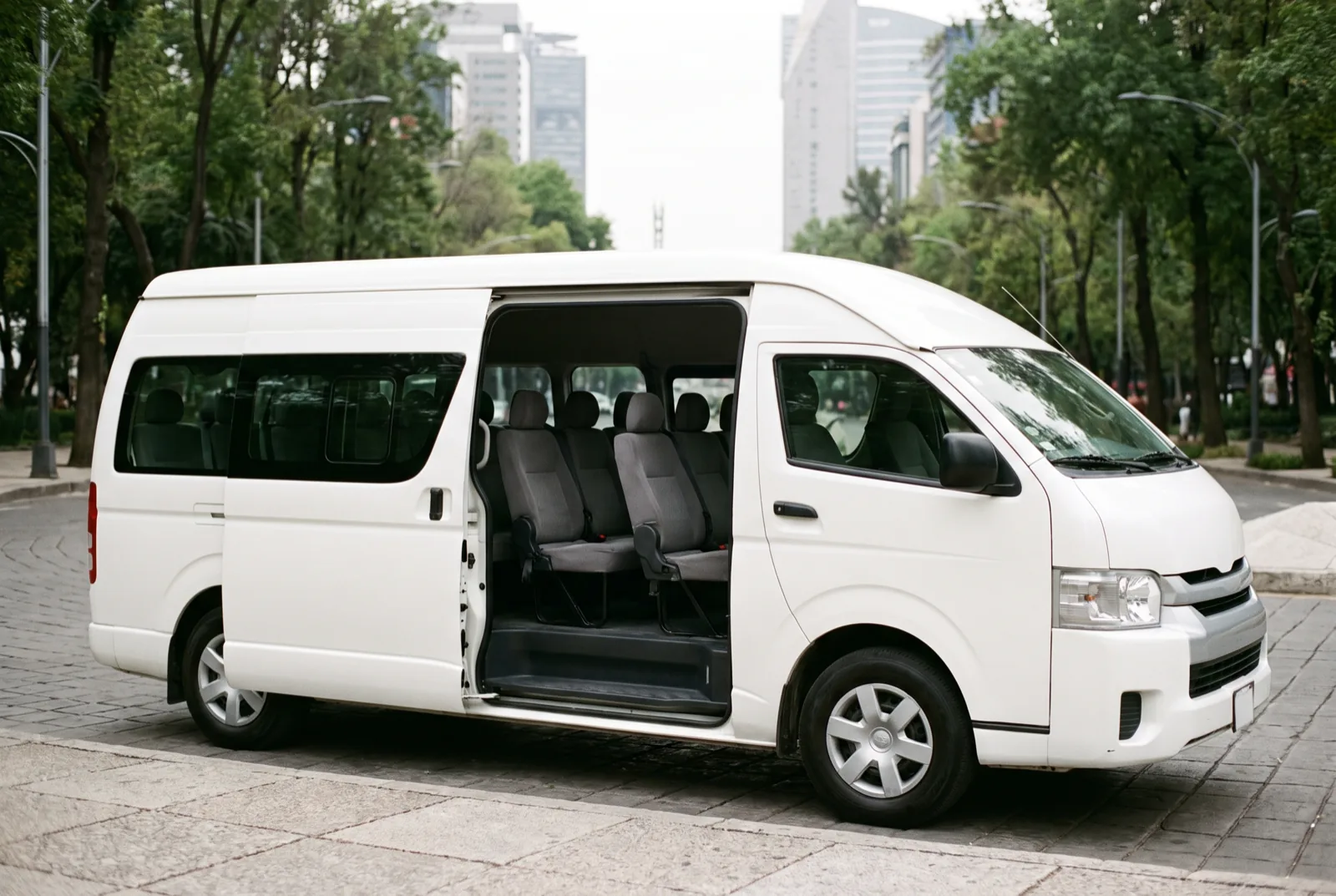
For a city stay with day trips, yes — a driver removes all four obstacles at once. The vehicle circulates legally, the insurance is in force, the toll tag is fitted and parking is handled while you are inside the museum. It is a flat $360 per vehicle for 8 hours in the SUV, or $420 in the van. If your question is whether that arrangement is itself trustworthy, read how private drivers in Mexico City are vetted, licensed and insured.
Plan the rest of your trip
- Do you need a car in Mexico City? — whether a vehicle earns its keep at all on a city stay.
- Hire a driver for the day in Mexico City — 8 hours, flat per-vehicle rate, your itinerary.
- Is it safe to hire a private driver? — vetting, licensing and avoiding airport touts, if the question is the driver rather than the road.
- Our per-vehicle prices — every route and both vehicles, all-inclusive.
- Private day trips from Mexico City — Teotihuacan, Puebla, Tepoztlan, Taxco and more, back before dark.
- Mexico City airport transfer — from $100 per vehicle, meet-and-greet with a name sign.
- Our vans and SUVs — the Ford Explorer and the 16-seat vans, with real luggage figures.
The full picture: how is driving in Mexico City, really?
The question "is it safe to drive in Mexico City" almost always arrives loaded with the wrong fear. Visitors picture the highway warnings that apply to Mexico's northern border states and assume the capital is a harder version of the same thing. The published guidance says otherwise: Mexico City carries the same Level 2 caution as most of central Mexico, and it is one of the places where the U.S. government imposes no movement restrictions on its own employees at all. Petty theft and opportunistic crime are the realistic risks, and they are the risks of any large city. Driving here does not put you in a different category of danger.
What it does put you in is a different category of administration. Hoy No Circula is the one that catches people out, because it has no equivalent in the United States, Canada or most of Europe: a rule that reads the last digit of your plate and takes your car off the road for a full day, and that treats a plate from outside the metropolitan area as more suspect than a local one, adding a six-hour ban every weekday morning and a blanket ban on Saturdays. Layer on Mexican liability insurance that your home policy cannot substitute for, camera fines that convert into cash instead of points the moment your plate is foreign, parking meters that want coins or a local app, and toll plazas that are actively removing the cash lane during 2026, and the picture becomes clear. Nothing on that list is dangerous. All of it is friction, and friction is what turns a rented vehicle into an expensive object parked outside the hotel.
That is the case for handing the wheel over rather than the case against Mexico City. A driver on local plates with a valid hologram is not restricted on the day your plate would have been. The insurance is already in force, the toll tag is already on the windscreen, and the parking problem in Polanco resolves itself because the vehicle is not parked — it is waiting with someone in it. The price is flat and per vehicle rather than per person, which means a family of six and a couple pay the same number, and the number already contains the fuel, the tolls, the parking and the waiting. For a trip built around the historic centre, Coyoacán, Xochimilco and a day at the pyramids, that is not a luxury upgrade over driving yourself. Once the insurance, the tolls, the meters and the lost restricted day are counted honestly, it is frequently the cheaper way to see the same things — and it returns you to the hotel in daylight, which is the one piece of advice the official guidance is unambiguous about.